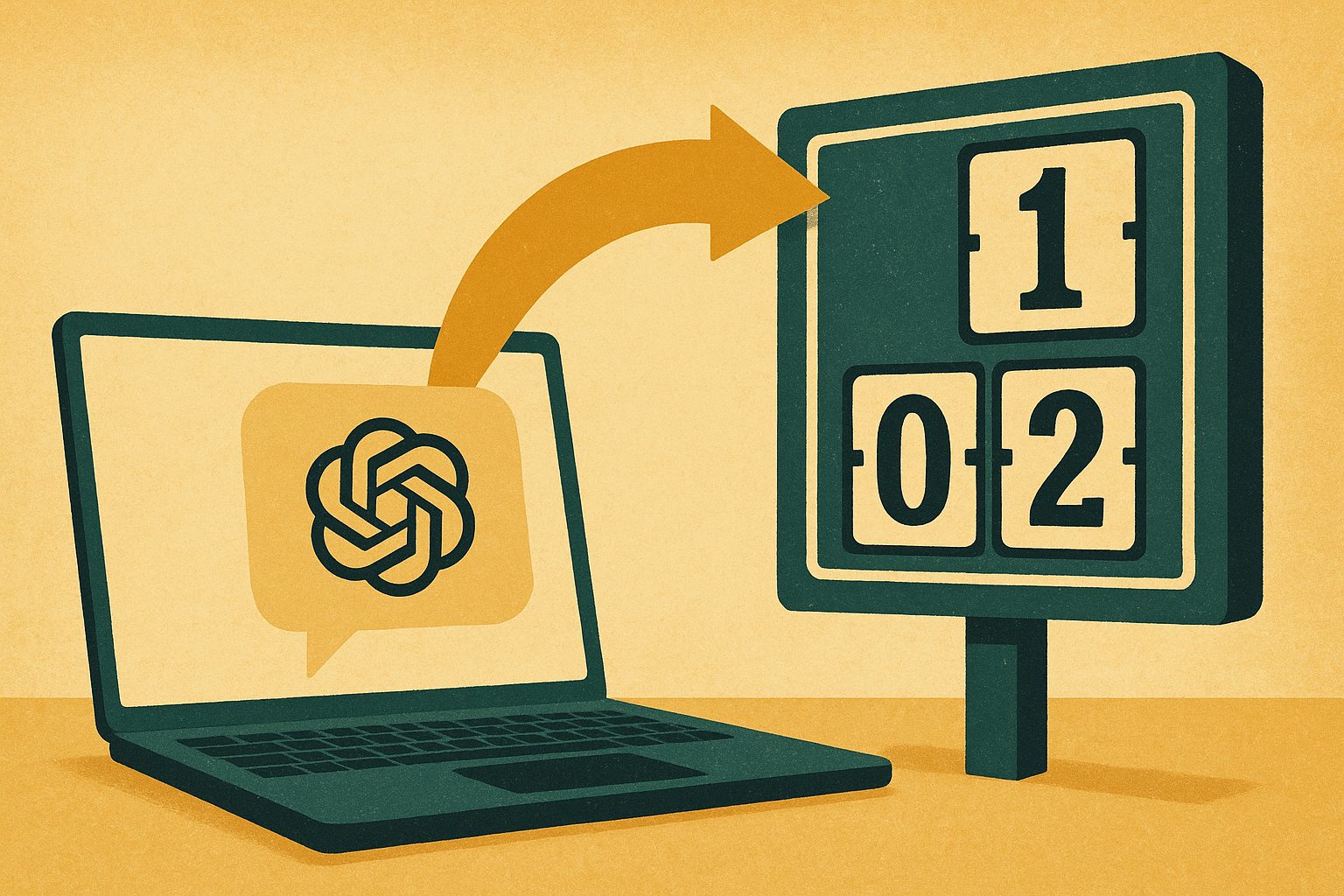
The new visibility scoreboard: what changes when customers ask ChatGPT first
AI search visibility marks a fundamental shift in how brands are discovered online. Where once marketers optimized for the classic “ten blue links” on Google’s search engine results pages (SERPs), a growing share of category research now begins with large language model (LLM)-powered AI assistants like ChatGPT, Perplexity, or Google’s Gemini. This change demands a rethink of how brand citations and rankings work, and what it takes to be visible in AI-driven search environments.
AI search visibility refers to how prominently and accurately a brand appears in responses generated by AI search engines that synthesize information from multiple sources rather than listing links.
Key takeaways
- The rise of AI search engines means traditional SEO for “ten blue links” is no longer enough; about a third of category research now starts with AI assistants.
- AI search engines rank and cite brands differently, emphasizing authoritative, well-structured, and contextually relevant information that LLMs can parse and rephrase.
- Brands should focus on structured data, authoritative citations, and AI-friendly content formats to improve their chances of being cited by ChatGPT, Perplexity, Gemini, and others.
From “Ten Blue Links” to AI-First Search: What’s Changed?
For two decades, search engine optimization (SEO) revolved around influencing Google’s ranking algorithms that prioritize relevance and authority to produce a list of ten blue links. These links direct users to websites deemed most relevant to their query. But this model is increasingly supplemented, and sometimes supplanted, by conversational AI search engines that generate direct answers synthesized from multiple sources.
Unlike classic SERPs, AI search engines do not simply rank pages by keyword relevance or backlink profiles. Instead, they rely on large language models trained on vast datasets and updated in real-time or near real-time with curated knowledge bases. When a user asks a question, the AI synthesizes an answer and cites a handful of sources to support its response. This shift means that brand citations within AI-generated content have become a new form of ranking signal, which we can call LLM rankings.
This change is visible in platforms like ChatGPT and Perplexity, where users receive concise, narrative answers instead of a list of search results. Perplexity, for example, explicitly attributes its answers to specific websites, making those citations a form of visibility and trust endorsement. Google’s Gemini, still evolving, aims to blend traditional search with conversational AI, further blurring the lines between classic SERP rankings and AI-driven synthesis.
Why AI Search Visibility Matters for Brands
Brands that fail to adapt risk losing a growing share of chatgpt traffic and other AI-driven discovery channels. Because AI assistants often serve as the first touchpoint in category research, being cited positively in their responses can influence purchase decisions and brand perception. Unlike traditional SEO, where clicks matter, AI search visibility is about being part of the narrative that users receive directly.
Moreover, the nature of AI citations means that brands must be discoverable not just on their own websites but across authoritative third-party content, structured data repositories, and knowledge graphs that feed LLMs. This multi-source visibility is harder to control but essential to establishing credibility in AI-first search environments.
Three Specific Actions to Boost AI Search Visibility This Quarter
- Implement and maintain structured data markup. AI engines rely heavily on schema.org and other structured data formats to understand and extract factual information about your brand, products, and services. Ensure your website includes up-to-date JSON-LD markup for key elements like organization info, product details, FAQs, and reviews. This makes your content more machine-readable and easier for LLMs to cite accurately.
- Build authoritative citations beyond your own domain. AI assistants value corroboration from trusted third-party sources. Work on securing mentions and backlinks from industry publications, reputable review sites, and data aggregators that AI models consult. These citations serve as signals of trustworthiness and relevance in LLM rankings.
- Create AI-friendly content tailored for synthesis. Write clear, concise, and well-structured content that answers common category questions directly. Use bullet points, numbered lists, and FAQs that AI can easily parse and repurpose. Avoid jargon and fluff; instead, provide concrete, verifiable facts that can be incorporated into AI-generated narratives.
FAQ: Navigating the AI Search Visibility Landscape
How is AI search visibility different from traditional SEO? Traditional SEO focuses on ranking webpages in a list of links, whereas AI search visibility emphasizes being cited within synthesized answers generated by LLMs. This requires attention to structured data, authoritative third-party mentions, and content clarity. Do AI search engines still use backlinks as a ranking factor? Backlinks remain important but function differently. Instead of influencing page rank alone, backlinks and citations help establish trustworthiness and authority that LLMs weigh when selecting sources to cite. Can brands control how AI assistants cite them? Brands have limited direct control but can influence citations by ensuring accurate, structured, and widely corroborated information is available. Monitoring AI citations through tools like Quedzal can help track and improve AI search visibility. Is optimizing for AI search visibility a replacement for traditional SEO? Not entirely. Both coexist for now. Traditional SEO still drives traffic via search engines, but AI search visibility is increasingly critical for brand discovery and influence at the research stage. How quickly should brands act on this shift? Given that about a third of category research already starts with AI assistants, brands should act immediately to adapt their digital presence for AI search visibility to avoid falling behind competitors.Conclusion: Measuring Your AI Search Visibility
The shift from Google-first to AI-first category research is not a distant possibility—it is happening now. Brands that understand the nuances of LLM rankings and AI citations will gain a competitive edge in how customers discover and trust them. To start, run a free Quedzal check on your brand to see how AI engines describe you today. This diagnostic will reveal your current AI search visibility and highlight opportunities to improve your standing in this emerging landscape.